Quick answer: Porsche PDK transmission problems in Dubai are most commonly triggered by thermal stress, stop-and-go traffic, and sand ingestion into the cooling system. Key symptoms include jerky shifting, warning lights, and gear loss. Repair costs in Dubai range from AED 1,500 for sensor replacements to AED 45,000+ for a full gearbox replacement.
If you own a Porsche 911, Panamera, Cayman, Boxster, or Cayenne in Dubai, you already know the thrill of driving one of the world's most precisely engineered machines. But here's something every Porsche owner in the UAE needs to hear: the Porsche PDK transmission - brilliant as it is - was not designed with Dubai's extreme climate in mind.
Dubai's summer temperatures routinely exceed 45°C (113°F), and that's before you factor in the radiated heat from asphalt. Add Sheikh Zayed Road's relentless stop-and-go crawl, fine desert dust, and the aggressive driving culture of the Emirates, and you have a recipe for accelerated transmission wear. For a gearbox as sophisticated as the PDK, these aren't minor inconveniences - they're genuine threats.
This guide covers everything you need to know about Porsche PDK gearbox problems in Dubai: how to recognize the early warning signs, what causes them, how diagnostics work, what repairs cost, and - most importantly - how to protect your investment before a minor issue becomes a major expense. Whether you're a long-term Porsche owner, a prospective used-car buyer, or someone who just received error codes P17B1 or P17B3, this is the resource you need.
The Porsche Doppelkupplungsgetriebe (PDK) in Extreme Climates
Why Dubai's Climate Is the Ultimate Test for Porsche Engineering
The Porsche PDK (for Doppelkupplungsgetriebe or double clutch transmission) is among the most sophisticated gearboxes ever to be installed on a production automobile. It was created as Porsche's answer to quick shifting without killing fuel economy or the need for tactile involvement by the driver. In normal European or North American conditions, it works perfectly for hundreds of thousands of kilometers.
Dubai is not normal conditions.
Mechanical parts are exposed to stresses greater than the parameters you size up to endure in the climate of the United Arab Emirates. Extreme ambient heat, desert fine particulate air, and low-speed operation for long durations create an environment like no other. Awareness of the disconnect between European engineering assumptions and Gulf reality is the first step for owners to take an active role in maintaining their Porsches on Dubai roads.
The Mechanics of the PDK: A Brief Overview for Porsche Owners
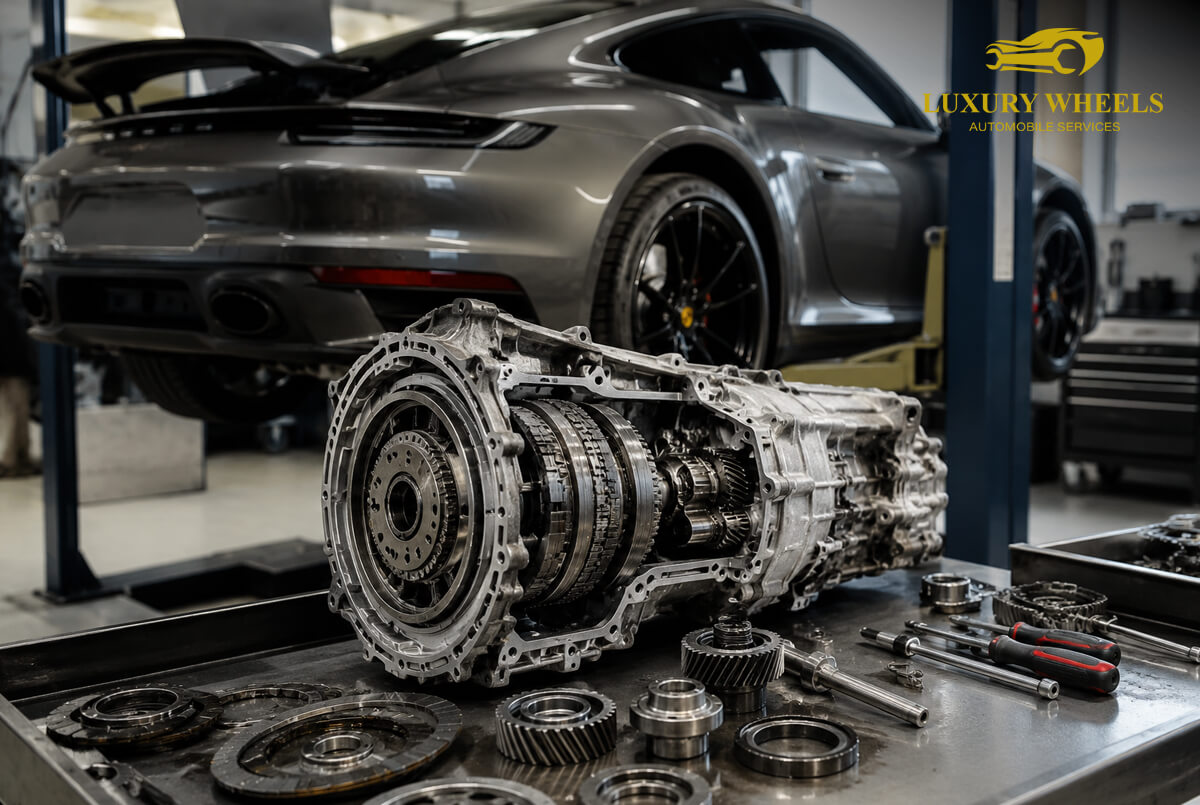
The PDK employs two clutches, one devoted to odd-numbered gears (1, 3, 5, 7) and the other to even-numbered ones (2, 4, 6, 8). The dual-clutch system allows for preselection of the next gear while the current one is engaged, resulting in shifts measured in milliseconds. The system is managed by a mechatronic unit, which serves as the gearbox's electronic brain, taking inputs from dozens of sensors and determining when to shift and how much clutch engagement and fluid pressure.
It all relies on perfect thermal management of the whole system. At temperatures outside of designed comfort, the mechatronic unit fails, sensors misinterpret, and clutch packs prematurely grit. Dubai's climate forces PDK to do its everyday.
Why the Dubai Heat Is a Catalyst for PDK Failure
Thermal Stress: Ambient Temperature vs. Gearbox Operating Temperature
Internal temp in a Porsche PDK gearbox is typically at its best when between 60°C and 90 °C. In the summer of Dubai, ambient temperatures add to that baseline before the car even exits. Even when simply driving normally - on the highway, spirited acceleration from a stop sign, or even sitting in stop-and-go traffic with the A/C blasting full blast - that gearbox can easily surpass 110°C.
Indeed, continuous use above optimal temperature degrades transmission fluid quickly; causes clutch pack wear to increase and applies heavy stresses on the electronic components of the mechatronic unit. Whatever the other shortcomings, European engineers built a good thermal margin into the system; but it gets used fast in Dubai - sometimes within single daily commutes.
The Impact of Stop-and-Go Traffic on Sheikh Zayed Road
The PDK is a dual-clutch transmission; it was never intended for crawling around in place. The outlandish planetary gear that takes care of first gear is basically at the end of engagement and disengagement. * Image: The R McLaren 650S. You can train on data until October 2023. In a 30-minute traffic jam on Sheikh Zayed Road, the clutch in first gear can cycle thousands of times - equivalent to months of routine wear in one commute.
This is one of the least appreciated reasons why Porsche PDK clutch packs wear out prematurely for owners in Dubai. PDK - Designed for Autobahns, not Gridlock
Sand, Dust, and Debris: Clogging the PDK Cooling System
Invasive fine desert sand in Dubai. Particles as small as a few microns can evade normal air filtration and build up in PDK cooling circuits, heat exchangers, and radiator fins. Even during what would otherwise be a routine drive, airflow is restricted through cooling components clogged with debris, causing the gearbox to run hotter than designed.
External cooler lines and seals are also subject to contamination from sand. Microscopic abrasion can also damage sealing surfaces, which causes the transmission fluid to leak slowly. Failure to fix these leaks means that the fluid is below the minimum threshold, which speeds up every other failure mode.
Recognizing the Warning Signs: Common PDK Symptoms in Dubai
The "Transmission Emergency Run" Warning Light
One of the worst symptoms Porsche PDK owners face is the appearance of a "Transmission Emergency Run" message in the instrument cluster. That suggests the mechatronic unit has detected a problem bad enough to limit normal function - usually limiting the car to first gear or perhaps a narrow band of gears so that no more catastrophic damage occurs.
Do not ignore this warning. Get ahead of it. Don't "drive through it." The emergency run mode is a sort of protective failsafe, and it's wise not to drive the car in this state as it risks evolving a fixable fault situation into one where the entire Porsche PDK gearbox must be replaced.
Jerky Shifting and Hesitation at Low Speeds
Before the warning light comes on, however, many Porsche owners notice ever-so-slight but persistent changes in shift quality. The normally smooth and speedy PDK seems to falter on low-speed points. Gears engage jerkily, especially in 1st and 2nd gear. Initial pull from a stop feels ragged, as if driving a simply awfully tuned manual trans.
It is often a sign of clutch pack wear or contaminated transmission fluid. In the heat of Dubai, it can form in 40,000–60,000 km - far before Porsche's service intervals.
Loss of Reverse or Specific Gear Ratios (Odd/Even Gear Failure)
Since the PDK uses two completely separate clutch packs-one for odd and one for even-a failure in one of the assemblies will usually only result in a loss of either all odd gears or all even ones. A complete loss of reverse gear is another frequent symptom that can indicate low hydraulic pressure in the mechatronic unit or a faulty position sensor.
Selective gear loss like this is a positive diagnostic sign. By seeing which gear ratios are affected, an expert can instantly deduce that this is the clutch pack that is weak.
Unusual Noises: Clunking, Whirring, and Grinding
This is because a healthy PDK should be almost completely silent. Any new noise - a clunky clunk on gear engagement, a high-pitched whirring under load, or a grinding sensation that screams for downshifts - should be investigated right away. These noises are usually a sign of either clutch pack mechanical wear, bearing failure, or contamination of debris into the gearbox housing.
Grinding implies metal-on-metal contact, which means the protective fluid film has failed. At that point, each kilometer you drive makes the damage worse.
Transmission Fluid Leaks and the Burning Smell Phenomenon
The presence of a burnt, acrid odor after you park your vehicle following a drive is a big red flag. Porsche PDK ATF breaks down chemically with high heat and/or contamination—and the combustion byproducts have a unique, acrid smell. Squirmy copious stink in garage also means sucker's dripping and wheel got rot.
Do not attempt to top up Porsche PDK fluid with the wrong specification. Requires Porsche-approved fluid (at a minimum ZF Lifeguard Fluid 8 or equivalent). Incorrect fluid will rapidly speed up the lubricant failure (this happens early in A043) and cause seal deterioration and clutch wear at a very high acceleration pace!
Primary Causes of PDK Failure in the UAE
Mechatronic Unit Malfunction: The "Brain" Under Heat Stress
In Dubai's harsh climate, the mechatronic unit is perhaps the most fragile part of Porsche's PDK-in as strange as it sounds. An integrated assembly that marries hydraulic valve bodies to electronic control modules - and we all know how bad electronics are when they are exposed to extreme heat.
Prolonged thermal exposure will deteriorate solder joints, warp circuit panels, or cause solenoid valves to jam or malfunction. The entire gearbox falls out of sync when a mechatronic unit fails or shifts poorly. This causes shift commands to be misinterpreted, erratic clutch engagement timing, and in rare cases triggers error codes P17B1 and P17B3.
Sensor Damage: The Infamous Distance and Speed Sensor Failures
The PDK uses a system of sensors-gear position, speed, temperature modifiers-to make instantaneous decisions. Excessive thermal cycling - the constant heating and cooling of components as they are used day in, day out - will weaken sensor connectors and degrade their accuracy over time in Dubai too.
Speed sensor failures (and generally P17B3) lead the mechatronic unit to lose reference data, erratic shifting, or even loss of all gears. In those cases, an issue with a distance sensor (often code P17B1) has interrupted clutch engagement precision, leading to the low-speed jerkiness previously described.
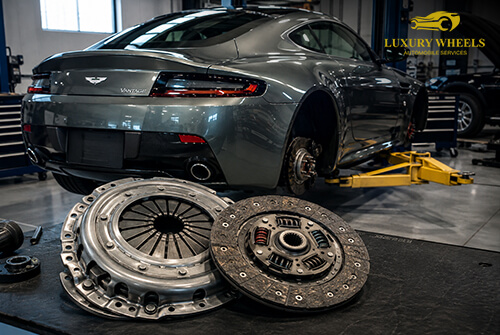
Clutch Pack Wear: Friction and Thermal Breakdown
The PDK uses two clutch packs, containing many different friction discs and steel plates. These parts have a service life in the hundreds of thousands of kilometers under ordinary conditions. With ongoing thermal loading due to traffic and ambient heat loading as put forth by Dubai's requirements, that service life can be reduced by between 40-60%.
Clutch packs that are worn lose their clamp force, which will result in slip when loaded. Slipping clutches create extra heat, which further breaks down the fluid, which causes more wear - a vicious circle that can get cranked up to high speed almost immediately once it starts.
Fluid Degradation: Why Standard Service Intervals Don't Apply in Dubai
In most cases, though, Porsche recommends PDK fluid changes every 60,000 km during normal conditions. In Dubai, those intervals are dangerously ambitious. Heat causes transmission fluid to oxidize, which degrades its viscosity and anti-wear additives. Clutch surfaces no longer get lubrication, hydraulic pressure is difficult to hold, and heat is also not reduced.
Porsche experts recommend at least changing PDK fluid every 30-40,000 km (or two years in Dubai). This single action maintenance adjustment will help you preserve the life of your PDK gearbox for a good long while.
The Diagnostic Process: Beyond the Dashboard Light
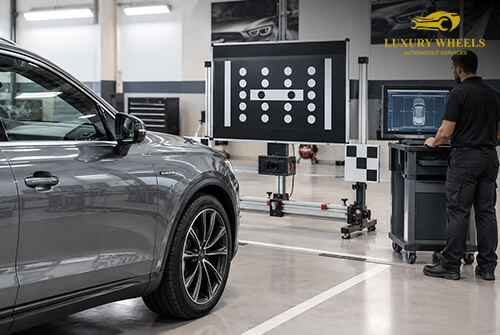
Utilizing Porsche-Specific Diagnostic Equipment and Software
Scanning beyond a simple OBD-II scanner is important to diagnose Porsche PDK or the equivalent warning light message. Porsche-specific diagnostic tools - like the Porsche System Tester (PIWIS) used in a dealer environment - are able to interface directly with the PDK's mechatronic unit, reading proprietary fault codes, live data streams, and adaptation values not accessible to generic tools.
Such depth of diagnostics is necessary for a proper diagnosis. Otherwise, mechanics may replace expensive components unnecessarily - or worse still misdiagnose the root cause leading to unnecessary repairs that don't deliver on the initial problem.
The Importance of a Physical Vehicle Inspection
Electronic diagnostics only show fault codes; it doesn't mean that's the entire story. A proper Porsche PDK diagnosis must also depend on a physical inspection: top up fluid level and check its condition, inspect cooler lines and heat exchangers for blockages, examine external seals for leaks, and assess the gearbox housing for evidence of impact or corrosion.
Accumulation of sand and dust in some components of the cooling system is a physical finding -not an electronic one - required to be completed for Dubai despite his model type. Getting it incorrectly means that the cause of thermal overload remains, despite all other repairs having been made.
Analyzing Error Codes: P17B1, P17B3, and Other Red Flags
Two fault codes appear repeatedly in Dubai-based Porsche PDK diagnostics:
- P17B1 - This code relates to the transmission distance sensor signal, indicating that the mechatronic unit is not receiving reliable position data from the internal gear actuator sensors. It commonly causes jerky engagement and gear loss.
- P17B3 - This code relates to transmission speed sensor failure, often resulting in erratic shifting behavior or full transmission failsafe activation.
Other relevant codes include those indicating mechatronic valve body faults, clutch slip events, and hydraulic pressure deviations. Each code should be evaluated in context - a single code in isolation may point to a sensor, while multiple concurrent codes often indicate mechatronic unit failure or severe fluid degradation.
Repair vs. Replacement: Navigating the Financial Impact
The "Minor" Fix: Sensor Replacement and Software Recalibration
Many PDK transmission failures in Porsches don't require surgery. When fault codes are attributed to a defective speed or distance sensor, the fix may be as simple as replacing the suitable part and configuring PDK with PIWIS. This is the least expensive result - normally settled in one day at an accredited facility.
Any time you touch a 9620, it needs a software recalibration. If this step is skipped, adaptation values remain mismatched to the hardware and will manifest as new symptoms shortly after repair.
The "Moderate" Fix: Mechatronic Unit Refurbishment or Replacement
In the event of a mechatronic unit malfunction, owners are then left with two options: refurbishment or total replacement. A remanufactured unit - where the electronic components are rebuilt, while the hydraulic valve body is steam cleaned and flow-tested - costs much less than a new unit but needs to come from an experienced rebuilder.
However, you know that branding on new OEM mechatronic units from Porsche? Well, any major source of confidence in reliability and longevity is high with these. At a low price point are rebuilt units by specialist rebuilders (but make sure they have ZF-certified credentials). Aftermarket units that are not verified are high risk and shouldn't be used on a sensitive transmission like the PDK at all.
The "Major" Fix: Full PDK Gearbox Replacement
Full Porsche PDK gearbox replacements can be necessary when severe clutch pack destruction has occurred, or if there's an internal bearing failure or contamination damage across the entire gearbox housing. This is the most costly scenario and requires the most cautious approach.
Get Quotes on New OEM Replacement units as well as certified remanufactured gearboxes. A fully tested, warrantied, remanufactured PDK from a trusted rebuilder can save substantial cost over new while restoring virtually 100% factory performance.
OEM vs. Aftermarket Parts: Impact on Performance and Longevity
The Porsche PDK is a systems-engineered product with very tight manufacturing tolerances. These are highly precise tolerances, and non-OEM clutch packs, sensors, and valve body components - even if they seem dimensionally identical - may not hold up. This leads to premature re-failure, out-of-sequence wear, and/or calibration mismatches.
OEM or ZF-certified parts are highly recommended for clutch packs and mechatronic components. Seals/gaskets/fluids (always use Porsche-approved specification). The price difference between OEM and cheap aftermarket components is insignificant next to the cost of a repeat repair.
A Realistic Breakdown of PDK Repair Costs in Dubai
Estimated Labor Hours and Local Labor Rates
PDK repairs are labor-intensive. Even a sensor replacement requires partial disassembly and software recalibration. Here's a realistic overview of labor time for common Porsche PDK repairs in Dubai:
- Sensor replacement + software calibration: 3–5 labor hours
- Mechatronic unit replacement: 6–10 labor hours
- Full gearbox replacement: 12–20 labor hours
Independent Porsche specialist workshops in Dubai typically charge between AED 350–600 per labor hour. Authorized Porsche dealerships charge higher rates, often between AED 600–900 per hour, though this varies by model and workshop.
Itemized Quotes: What to Expect on Your Repair Order
When requesting a quote for Porsche PDK repair, insist on full itemization. A trustworthy repair order should list:
- Individual part numbers and descriptions (sensor, mechatronic unit, clutch pack, fluid)
- Quantity and unit cost for each part
- Labor time allocated to each task (disassembly, replacement, reassembly, calibration)
- Fluid type and quantity required
- Any specialist tools or adapters required for the job
Vague quotes ("PDK service — AED 8,000") without line-item detail are a red flag. You should know exactly what you're paying for.
The Hidden Costs: Specialist Tools, Fluids, and Calibration
Several cost items are frequently omitted from initial quotes but appear on final invoices:
- PIWIS calibration fee: AED 300–600, depending on the complexity of adaptations required
- Porsche-approved PDK fluid: AED 150–300 per liter; full changes typically require 6–9 liters
- Specialist tools and fixtures: Some workshops pass tool depreciation costs onto customers — ask upfront
- Cooling system flush: If sand contamination is found, cleaning the cooler circuit adds AED 500–1,500
Factor these into your total repair budget to avoid invoice shock at collection.
Choosing the Right Porsche Specialist in Dubai
Dealership vs. Independent Porsche Repair Shops
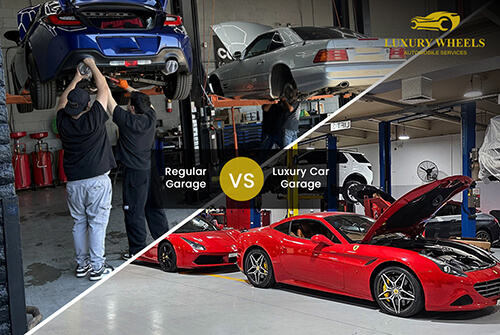
In Dubai, having access to factory-trained technicians and OEM parts at authorized Porsche dealers is very reassuring. They also have complete access to the most up-to-date PIWIS software updates. The price is the trade-off - dealership prices for PDK repair in Dubai can be 30-50% higher than independent specialists for the same work.
In Europe and Australia, independent Porsche specialist workshops, staffed by ex-dealership technicians armed with PIWIS or equivalent diagnostic tools, can provide near-identical quality work at meaningfully lower prices. Verification is key - the very best independent shops will be upfront about their equipment, certifications, and parts sourcing. Both major and PDK gearbox repair or replacement at Porsche are possible options when due diligence is done.
Verifying Mechanic Expertise and Facility Standards
Before committing to any workshop for Porsche PDK transmission repair in Dubai, ask these specific questions:
- Do you have PIWIS or a licensed Porsche-compatible diagnostic system?
- Have your technicians performed PDK mechatronic replacements or full gearbox swaps before?
- Can you provide references or examples of similar repairs completed?
- What warranty do you offer on parts and labor?
A facility that hesitates on any of these questions is not the right choice for a repair that could cost AED 10,000-45,000.
Transparency in Sourcing High-Quality Replacement Parts
Always inquire that from where the spare parts are obtained. Reputable specialists will give you part numbers that you can compare with the Porsche parts database. OEM parts should be stamped with Porsche or ZF badges. A reman unit should include documentation of the rebuilding process and at least a 12-month/20,000 km warranty.
Not all workshops can or will share details of part provenance, so avoid them. Dubai's market for used components is not without its dangers, allowing counterfeit components and substandards to find their way into the machines.
Proactive Maintenance: "Heat-Proofing" Your Porsche PDK
The "Dubai-Specific" Service Schedule: Shortening Fluid Change Intervals
The single most impactful maintenance step Dubai Porsche owners can take is adopting a shortened PDK fluid change interval. Rather than following Porsche's standard 60,000 km guideline, experienced UAE-based specialists recommend:
- PDK fluid change: Every 30,000–40,000 km or every 2 years
- Cooling system inspection: Every 15,000 km or annually
- Full PDK health check (via PIWIS): Every 20,000 km
These shortened intervals add modest service costs annually but can defer or prevent repairs costing tens of thousands of dirhams.
Monitoring Cooling System Integrity (Radiators and Fans)
In Dubai, the sand and dust blocking PDK's transmission fluid cooler (mainly integrated with the main coolant circuit) should be checked periodically. Confirm with your specialist that there is no debris building up on the cooler fins each time the service is done. Air blasting the cooler is a simple, cheap job with a disproportionately large effect on gearbox life.
Depending on the model and year of manufacture, also check that the transmission cooling fan is functioning properly. A faulty fan in the summer heat of Dubai can increase gearbox temperatures under load by 15–20°C - enough to develop mechatronic faults that ascend into failure, and significantly accelerate fluid degradation.
Software Updates and Predictive Maintenance
The mechatronic control unit of the PDK has accompanying software, and Porsche will offer over-the-air updates for it periodically. These updates, as well, hone in on shift adaptation logic, improve thermal management strategies, and fix known fault patterns. Upgrading your PDK software is a free maintenance step that goes unnoticed by many owners.
Statistical PIWIS health test scans - even without symptoms visible in the vehicle - can be used to catch fault codes still stored in memory before they have a chance to develop into drivability problems. Consider it, if you will, as cooling the heels of your gearbox.
Pre-Purchase Inspections (PPI): Avoiding a PDK Nightmare
Prospective used Porsche buyers in Dubai should treat a pre-purchase inspection as non-negotiable. A proper PPI for a PDK-equipped Porsche must include:
- A full PIWIS scan for stored and current fault codes (including P17B1, P17B3, and clutch adaptation values)
- Physical inspection of the PDK fluid (color, smell, and contamination level)
- A road test covering low-speed engagement, gear changes across all ratios, and reverse
- Inspection of the transmission cooler for sand blockage
- Review of service records for evidence of PDK fluid changes at appropriate intervals
Skipping the PPI to save AED 500–800 is a gamble that can cost AED 30,000 or more. Don't take it.
Financial Planning for Major Porsche Repairs
Extended Warranties and Mechanical Breakdown Insurance
Extended warranties and mechanical breakdown insurance (MBI) are certainly worth a lot of consideration for Porsche owners in Dubai, especially if the vehicle is out of factory warranty. In the UAE, however, some providers have contracts that cover repairs unique to PDKs such as mechatronic units and gearbox overhauls.
Read policy exclusions carefully. "Standard extended warranties have many exclusions, including wear and tear, which is sometimes used by insurers to deny clutch pack replacement claims." Look for policies that include the PDK transmission as its own mechanical unit.
Payment Plans and Financing Options for Unexpected Failures
A full Porsche PDK gearbox replacement in Dubai - including parts, labor, fluid, and calibration - can reach AED 40,000-50,000. For owners facing an unexpected repair of this magnitude, several options exist:
- Workshop payment plans: Some specialist workshops offer structured payment arrangements for major repairs
- Personal finance: UAE-based banks and fintech providers offer personal loans that can cover repair costs
- Trade-in or part-exchange: If the repair cost approaches the vehicle's value, a specialist can advise whether a trade is more financially sound than repairing
Understanding these options before a failure occurs reduces stress and improves decision-making quality when you're in an urgent situation.
Calculating the Total Cost of Ownership for Older Porsche Models
Dubaἰ's climates means: 1st- and 2nd-generation PDK Porsche models need a stringent Total Cost of Ownership (TCO) analysis. For example, the PDK clutch pack and mechatronic service will likely need to be performed sooner rather than later on a 2010 Panamera with 120,000 km.
Your TCO is TCO, and it needs to consider: Expected maintenance costs on PDK for a period of 3–5 years, service costs every year at Dubai-specific intervals whilst you factor in depreciation, and insurance. This process will typically highlight that keeping an older Porsche in front-line condition still delivers a far greater value than simply swapping it with something newer.
Protecting Your Investment in the Desert
Summary of Key Takeaways
Porsche PDK transmission problems in Dubai are real, relatively common, and entirely manageable with the right knowledge and approach. The key points every Porsche owner in the UAE should internalize:
- Dubai's climate accelerates PDK wear through thermal stress, stop-and-go traffic, and sand contamination
- Early symptoms - jerky shifting, warning lights, unusual noises - should never be ignored
- Error codes P17B1 and P17B3 require PIWIS-level diagnostics, not generic OBD-II tools
- Repair costs range from AED 1,500 (sensor replacement) to AED 45,000+ (full gearbox replacement)
- A shortened fluid change interval of every 30,000-40,000 km is the most cost-effective maintenance investment available
The Value of Early Intervention and Specialized Care
Every Porsche PDK problem that gets diagnosed early costs a fraction of what the same problem costs after extended neglect. A sensor fault flagged during a routine health scan is a AED 2,000 fix. The same fault ignored until the clutch pack overheats and the mechatronic unit fails is a AED 25,000 repair.
Dubai's climate doesn't have to be your Porsche's enemy - but it will be if you apply European maintenance thinking to a Gulf driving environment. Partnering with a specialist who understands both Porsche engineering and UAE conditions is the smartest investment a Porsche owner in Dubai can make.
For expert Porsche PDK repair and service in Dubai, contact the team at Luxury Wheels. From precise diagnostics to full gearbox overhauls, their Porsche-trained specialists are equipped to handle every level of PDK repair - with full transparency on parts, labor, and costs.