Table of Contents
- Why Luxury Braking in Dubai is a Unique Challenge
- Understanding the Luxury Difference: Why Your Car Isn't Average
- The Material Science: Ceramic vs. Semi-Metallic Pads in a Hot Climate
- Brand-by-Brand Replacement Guide: Estimating Your Mileage Intervals
- Driving Style Matrix: Moving Beyond Static Mileage Estimates
- Warning Signs for the Dubai Luxury Driver: Beyond the Dashboard
- The Secret to Longevity: Professional Maintenance and Bedding-in
- Choosing the Right Service: From Al Quoz to Specialized Centers
- The Verdict: A Quick-Reference Table for Dubai Luxury Owners
- Conclusion: Protecting Your Investment and Ensuring Safety on UAE Roads
- Frequently Asked Questions About Luxury Car Brake Pads Replacing
Wondering when your luxury car needs a brake pad replacement? You're in the right place! Whether you drive a Porsche, a Ferrari, or a Range Rover, the honest answer isn't a single number it depends on your car, your pads, and Dubai's demanding roads. With over a decade specializing in high-performance and luxury braking systems, we'll walk you through it all with confidence and clarity.
This guide blends real diagnostic experience with practical mileage estimates, so you can protect your investment, your safety, and your car's resale value.
Why Luxury Braking in Dubai is a Unique Challenge
Some of the toughest traffic in the world is in Dubai. Three things extreme heat, heavy traffic, and fine sand quickly destroy even the best brakes. Understanding this is the first step to smarter luxury vehicle brake maintenance in Dubai.
The Heat-Friction Paradox in 50°C UAE Summers
Friction changes kinetic energy into heat, which is how brakes work. But if the temperature outside is already 50°C, the friction material and brake disks are already much hotter.
That means there is less thermal headroom before the brakes start to fade. Repeated heat soak speeds up the wear on the pad material and can bend rotors over time, which makes stopping less effective.
The Sheikh Zayed Road Factor: How Stop-and-Go Traffic Accelerates Wear
Crawling along SZR is one of the harshest things you can do to your brakes. Every stop-and-go cycle loads the pads and discs with fresh heat that never fully dissipates.
This constant friction shortens the brake pad lifespan for luxury cars dramatically. City-heavy drivers often see intervals far shorter than the manufacturer's ideal figure.
Sand, Humidity, and Their Impact on High-Performance Brake Discs
Between your pads and disks, fine dry sand wears them down. When you add coastal humidity, you get scoring on the surface and early corrosion on the edges of the rotor that are exposed.
As a result? Uneven pad transfer, slight vibration, and early wear are all problems that cheap shops don't always figure out correctly.
Understanding the Luxury Difference: Why Your Car Isn't Average
Luxury and high-performance cars just need stronger brakes. More weight, bigger engines, and faster speeds all mean that the brakes have to work harder, which changes everything about upkeep.
Heavy-Duty Braking for V8 Engines and High-Performance SUVs
A twin-turbo V8 generates enormous momentum. Stopping that force repeatedly demands larger calipers, thicker discs, and premium friction material engineered for serious heat. High-performance SUVs face the toughest job of all, combining big power with big weight.
The Relationship Between Air Suspension, Vehicle Weight, and Braking Stress
Even though smart air suspension makes the ride smooth, cars like the Range Rover and Bentayga have a lot of weight. And every time you slow down, that weight has to be scrubbed off by the brakes.
More mass means more power, more heat, and pads and rotors wear out faster.
Why Luxury Brake Systems Require Full Diagnostics Over Simple Visual Inspections
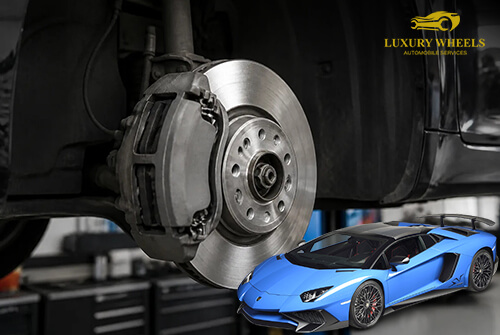
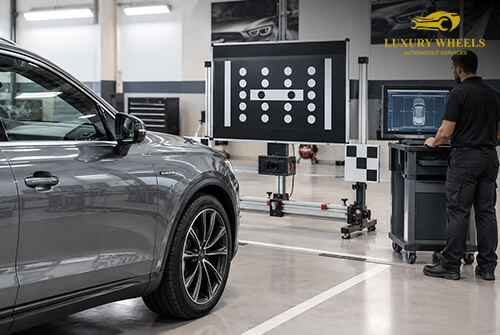
A quick look at how thick the pad is doesn't tell the whole story. A proper brake inspection for a luxury car checks the health of the calipers, the run-out of the rotors, the condition of the brake fluid, and the electronic wear sensors.
There is a big difference between a service at a checkout counter and real expertise.
The Material Science: Ceramic vs. Semi-Metallic Pads in a Hot Climate
One of the smartest things a Dubai driver can do is pick the right friction material. Here's how the main choices work in our weather!
Ceramic Brake Pads: The Gold Standard for Heat Resistance and Low Dust
Ceramic pads work great in hot conditions and make a lot less brake dust, which keeps those beautiful metal wheels clean. You can drive them every day in comfort because they are stable and quiet.
The heat resistance is very high for carbon ceramic brakes on supercars, but repair needs to be done by a professional.
Semi-Metallic Pads: Balancing Stopping Distance and Thermal Conductivity
The thermal conductivity and stopping power of semi-metallic pads are very good. They get rid of heat quickly, which fans love for fast driving.
There is a little more dust and noise, but the bite gives you confidence.
The Hidden Cost of Organic Brake Pads in Extreme Temperatures
Organic pads are soft, quiet, and cheap, but they don't work at all in Dubai's heat. They fade and wear out quickly, and they can't handle the heat needs of a performance car. If you want to save money, don't buy organic pads.
Brand-by-Brand Replacement Guide: Estimating Your Mileage Intervals
So, how often should the brake pads on a high-end car be changed? These estimates are based on conditions in Dubai, not numbers from a lab.
The Performance Icons: Porsche, Ferrari, and Lamborghini (Carbon-Ceramic Focus)
Once every 25,000 to 40,000 km of hard use, these machines' steel parts need to be fixed. If you take care of your carbon ceramic setup the right way, it can last much longer sometimes more than 100,000 km.
These numbers drop quickly on track days and hard stops.
The German Giants: Mercedes-Benz (AMG) and BMW (M-Series)
Every 30,000 to 50,000 km, AMG and M-Series cars need new brake pads. In Dubai, their high-performance brake pads get worn down quickly on the highway and in the city heat.
Regular inspection keeps them razor-sharp.
The British Heavyweights: Range Rover and Bentley
This is about weight. Every 30,000 to 45,000 km, or sometimes sooner if you have a heavier Bentayga or a Range Rover that is pulling something.
For these cars, cautious, high-quality brake repair in Dubai is a must.
The Silent Smoothness: Rolls-Royce and the Pursuit of Noise-Free Friction
Rolls-Royce owners expect zero noise and a flawless feel. Pads generally last 40,000–60,000 km, but even a faint squeal or vibration warrants attention to preserve that signature serenity.
Driving Style Matrix: Moving Beyond Static Mileage Estimates
Your badge doesn't mean as much as the things you do every day. Here are three common ways that people drive in Dubai that change the situation.
The SZR Commuter: High-Frequency, Low-Speed Friction Cycles
Every day, traffic jams cause cars to stop at low speeds all the time, which builds up heat. People who drive commuting cars should expect to change their brake pads less often than those who drive luxury cars.
The Weekend Jebel Jais Enthusiast: High-Heat, High-Performance Stress
When you go down a mountain, the constant, heavy load on your brakes can damage them. Performance pads and more frequent brake checks for luxury cars are good for fans.
The Highway Cruiser: Maximizing Pad Longevity on the E11
A steady E11 cruise is the best-case situation. With smooth, gradual stopping, pads can last a lot longer than the numbers given for city use.
Warning Signs for the Dubai Luxury Driver: Beyond the Dashboard
Learn how to talk to your car! You will save money and stay safe if you notice these signs early.
Squealing vs. Squeaking: Differentiating Heat-Soak from Material Wear
It's possible for heat soak to cause a short squeak after a hot stop. When squealing keeps happening, it's generally a sign that the friction material is wearing down and needs to be checked.
Steering Wheel Vibration and Pulsing: The Rotor Connection
Pulsing through the pedal or steering wheel points to rotor vibration from uneven discs. Warped rotors demand rapid attention before they damage other components.
Metal Scraping and Grinding: Identifying Sand-Induced Scoring
Grinding is serious. It often signals metal-on-metal contact or sand-induced scoring on the disc surface stop driving and book a check immediately.
Understanding the ABS Indicator Light and Electronic Wear Sensors
Modern luxury cars use electronic wear sensors tied to the dashboard. When the ABS warning light or brake alert appears, treat it as a direct request for service.
The Secret to Longevity: Professional Maintenance and Bedding-in
Great brakes aren't just fitted they're cared for! These practices extend life and protect performance.
The Importance of OEM Parts for Maintaining Resale Value
OEM parts match your car's exact engineering, preserving stopping performance and resale value. Cheap aftermarket pads can compromise both.
Proper Bedding-in Procedures for High-Performance Friction Materials
New pads need correct bedding-in to transfer material evenly onto the discs. Skip this step, and you invite vibration and premature wear.
The Critical Role of Brake Fluid Boiling Points in the UAE
Brake fluid absorbs moisture and loses boiling resistance over time. In the UAE heat, fresh high-boiling-point fluid is essential to prevent brake fade.
Why Master Cylinder and Caliper Health Must Be Part of Your Service
Healthy calipers and a strong master cylinder ensure even pressure and clean pad release. Ignoring them undermines even the best pads.
Choosing the Right Service: From Al Quoz to Specialized Centers
Not every workshop understands luxury braking. Choosing the right one makes all the difference.
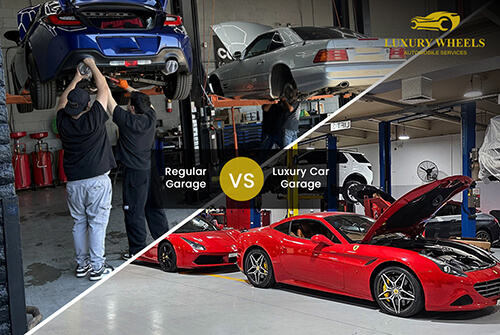
Why Generic Brake Repair Services Can Compromise Luxury Performance
Generic shops often treat every car identically, missing the nuances of high-performance systems.1 For your investment, that's a real risk.
What to Expect from a High-End Brake System Diagnostic
Expect full digital diagnostics, rotor measurement, fluid analysis, and caliper inspection not just a pad glance.
Integrating Brake Service with Cooling System and Spark Plug Checks
Smart performance car brake service in Dubai looks at the whole picture, coordinating brakes with cooling and engine health for peak reliability.
The Verdict: A Quick-Reference Table for Dubai Luxury Owners
Estimated Intervals by Brand, Material, and Driving Environment
| Brand | Pad Material | City / SZR | Highway (E11) | Spirited / Track |
|---|---|---|---|---|
| Porsche / Ferrari / Lamborghini | Carbon ceramic | 60,000–90,000 km | 90,000–120,000 km | 40,000–60,000 km |
| Porsche / Ferrari / Lamborghini | Steel/semi-metallic | 20,000–30,000 km | 35,000–45,000 km | 15,000–25,000 km |
| Mercedes-AMG / BMW M | Semi-metallic | 25,000–35,000 km | 45,000–55,000 km | 20,000–30,000 km |
| Range Rover / Bentley | Semi-metallic | 25,000–35,000 km | 40,000–50,000 km | 20,000–30,000 km |
| Rolls-Royce | Ceramic | 35,000–45,000 km | 55,000–65,000 km | 30,000–40,000 km |
Estimates only your true interval depends on driving style, load, and inspection results.
Conclusion: Protecting Your Investment and Ensuring Safety on UAE Roads
Your brakes are the single most important safety system in your luxury car and Dubai asks a lot of them! The right pads, correct materials, and expert care keep your stopping performance flawless and your resale value strong.
With 10+ years specializing in luxury and performance braking systems, our team knows exactly what your machine needs.
Ready to protect your investment? Book your specialist luxury brake inspection in Dubai today. We'll diagnose your full brake system, recommend the ideal friction material, and keep you confidently in control on every road. Reserve your appointment now!