Table of Contents
- Understanding the Core Differences: At a Glance
- What is Wheel Alignment? Adjusting Your Vehicle's Suspension Geometry
- What is Tyre Balancing? Correcting Weight Distribution
- Why the UAE Environment Demands More Frequent Checks
- The Economic Case: How Proper Maintenance Saves You Money in the Long Run
- The Synergistic Relationship: Why You Often Need Both
- Safety Risks: The Hidden Dangers of Neglect
- When Should You Visit a Technician? A Recommended Schedule for UAE Drivers
- What to Expect During a Professional Service
- Conclusion: Protecting Your Investment and Staying Safe on UAE Roads
- Frequently Asked Questions (FAQs)
TL;DR: Wheel alignment corrects your vehicle's suspension geometry so tyres point in the right direction. Tyre balancing corrects uneven weight distribution across each wheel. Both services are essential for safe driving in Dubai-where extreme heat, speed bumps, and high-speed motorways accelerate wear faster than almost anywhere else in the world.
Your car is telling you something. Maybe the steering wheel pulls to the left. Maybe you feel a persistent vibration through the floor at 100 km/h on the E311. Or maybe your front tyres are wearing out months ahead of schedule-again.
These symptoms aren't random. They're the result of two distinct mechanical issues: poor wheel alignment and unbalanced tyres. And while many Dubai drivers use these terms interchangeably, confusing one for the other leads to the wrong fix, wasted money, and-more seriously-compromised safety.
This guide breaks down exactly what each service does, how Dubai's unique driving environment makes both more urgent, what warning signs to watch for, and when to visit a professional technician. By the time you're done reading, you'll know precisely what your car needs and why it matters.
Understanding the Core Differences: At a Glance
Before diving into the mechanics, here's the simplest way to frame it:
- Wheel alignment = the angles at which your tyres meet the road
- Tyre balancing = the even distribution of weight around each wheel
They're related-but they solve completely different problems.
Defining Wheel Alignment (Suspension Geometry)
Wheel alignment, also known as wheel alignment or car alignment, involves changing the suspension of your vehicle so that the four wheels are at the right angles to each other and also to the road surface.
It doesn't involve touching the tyres in themselves. Instead, the technicians adjust the suspension parts, which are the mechanical links between your wheels and the car's frame. If these angles diverge from the mark, it results in unbalanced tyre-road contact, pulling, and faster wear.
Defining Tyre Balancing (Weight Distribution)
Balancing tyres addresses the issue of weight distribution. Every tyre and wheel assembly has minor weight inconsistencies-tiny variations in rubber density or rim shape that, at speed, cause the wheel to wobble or vibrate. A tyre-balancing machine rotates the wheel at a high speed, detects any imbalance, and allows technicians to add small weights in order to compensate.
The outcome: a smooth, vibration-free ride, even at motorway speeds.
Why Drivers Often Confuse the Two Services
Both can trigger vibrations. Both can affect the way that the vehicle responds. They are both addressed during the same service appointment. That overlap is why car owners-reasonably-assume they're the same thing. They're not. In fact, misalignment can cause directional problems and uneven wear on tyres. In the majority of cases, imbalance causes oscillation and vibration. Each needs a distinct diagnosis and solution.
What is Wheel Alignment? Adjusting Your Vehicle's Suspension Geometry
The process of aligning wheels is extremely precise. Modern automobiles are designed to extremely tight tolerances, and even a slight deviation from the specifications of the manufacturer will have an impact on the handling performance, fuel efficiency, and the life of tyres.
The Three Pillars of Alignment: Camber, Caster, and Toe
There are three primary alignment angles that technicians measure and correct:
- Camber: The inward or outward tilt of the tyre when viewed from the front of the vehicle. Negative camber (top of tyre tilted in) improves cornering grip but accelerates inner-edge tyre wear if excessive.
- Caster: The angle of the steering axis when viewed from the side. Proper caster provides straight-line stability and helps the steering wheel return to center after turning.
- Toe: The degree to which tyres point inward (toe-in) or outward (toe-out). Toe misalignment is the most common cause of rapid, feathered tyre wear and is often the first angle to drift out of spec.
Common Signs Your Alignment is Off: Vehicle Pulls and Crooked Steering Wheels
The most obvious signal is a vehicle that drifts to one side when you let go of the wheel on a flat, straight road. Other signs include:
- A steering wheel that sits crooked while driving straight
- Squealing tyres during normal turns
- Rapid or uneven tread wear, particularly on inner or outer edges
- A general sense that the car feels "loose" or imprecise
How Misalignment Affects Your Tyre-Road Contact and Tyre Footprint
A correct alignment maximizes the tyre's contact patch - the portion of rubber which actually touches the road. When alignment isn't correct, only a portion of the tread is in contact with the road. This pressure concentration causes uneven wear of the tyres and can cause a loss of grip, especially during emergency brakes or sudden changes in lane.
What is Tyre Balancing? Correcting Weight Distribution
Every tyre and wheel combination that comes off a manufacturing line is not without minor imperfections. A tiny, heavy spot here, a tiny variation in the thickness of the rubber there. At slow speeds, they don't really have any significance. At 120 km/h on the E11? They definitely do.
The Science of Unbalanced Wheels: Why Centrifugal Force Matters
The speed of the wheel increases, and the centrifugal force increases any imbalance in weight. A place that is just a couple of milligrams heavier than other parts of the wheel generates an ongoing force that expands with each turn, creating the rumble that you feel through the floorboard or steering wheel. The more you speed up, the more intense it gets.
How Technicians Use Specialized Balancing Equipment and Wheel Weights
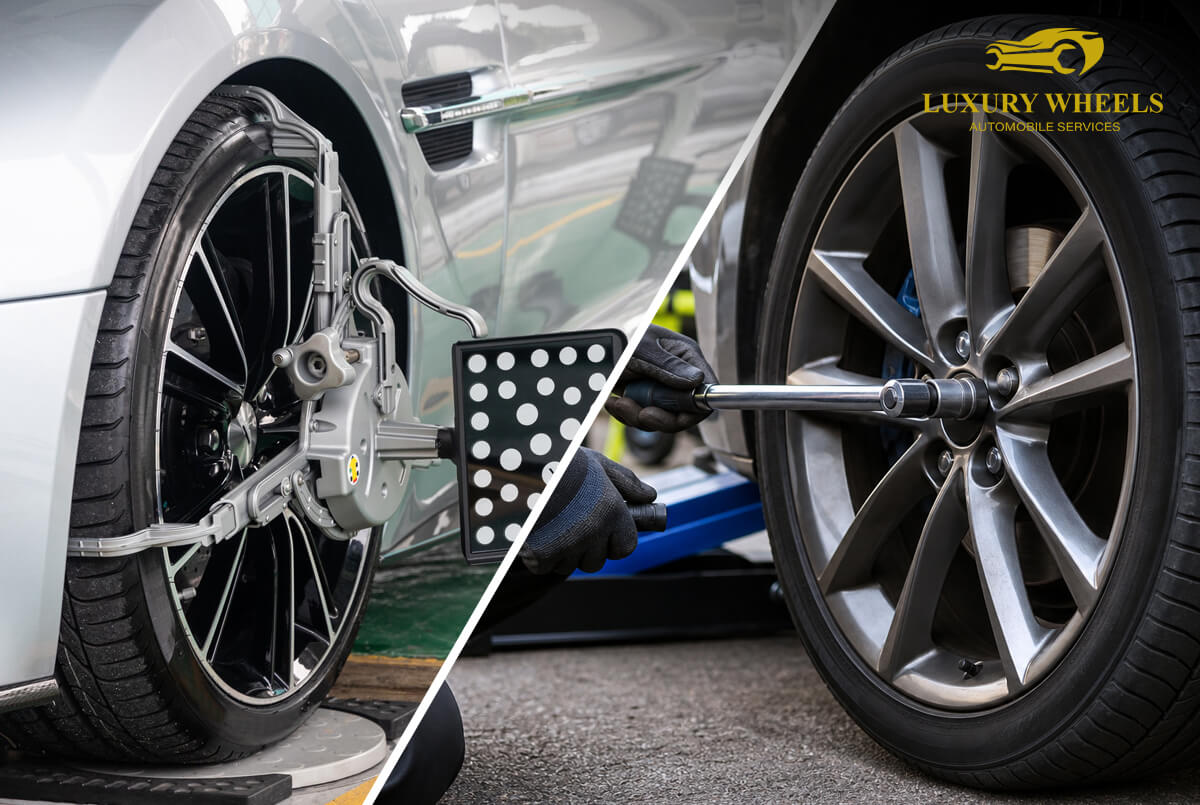
A tyre balancer machine rotates the wheel assembly in a rapid manner and makes use of sensors to identify the exact location and extent of the imbalance. Technicians then apply small metal clips or adhesive patches to the rim in the exact place needed to offset the weighty area. It's a precise, information-driven procedure that takes only a few minutes; however, it makes a big difference.
Static vs. Dynamic Balancing: Achieving a Smooth Ride at High Speeds
- Static balancing corrects up-and-down (vertical) imbalance and is adequate for narrower tyres.
- Dynamic balancing corrects both vertical and side-to-side imbalance simultaneously. For wider, performance-oriented tyres common on luxury vehicles and SUVs in Dubai, dynamic balancing using modern tyre balancing machines is the appropriate standard.
Symptoms of Imbalance: Steering Wheel Vibration and Floorboard Wobbles
Key warning signs of unbalanced tyres include:
- Steering wheel vibration that increases with speed
- Wobbling or shaking felt through the seat or floorboard
- Scalloped or cupped tread wear patterns (small dips appearing across the tyre surface)
- Noise that increases with highway speed
Why the UAE Environment Demands More Frequent Checks
The driving conditions in Dubai are extremely demanding. A combination of severe weather as well as the road infrastructure and the speed of motorways means it is more likely that alignments of the wheels as well as tyre-balancing are more prone to failure than in regions with more temperate climates.
The Impact of Extreme Heat (50°C+) on Tyre Pressure and Thermal Expansion
The temperatures of summer in the UAE often exceed 50°C. When temperatures are that high, the pressure of tyres fluctuates dramatically. The pressure of tyres is altered by being underinflated or overinflated. The contact patch is compromised, which puts unpredictable tension on suspension components and can alter geometrical alignment. The rubber itself becomes soft under prolonged heat, which makes it more prone to wear unevenly when alignment isn't perfect.
Navigating UAE Infrastructure: The Toll of Speed Bumps and Road Bumps
The streets of Dubai's residential areas are lined with speed bumps. Every speed bump, especially when it is accompanied by vehicles that are loaded or an SUV, hurts a hefty impact load directly onto the suspension. The ball joints compress, bushings expand, shift in alignment, and angles of alignment shift. One hard blow on a speed bump at an incorrect angle could throw the vehicle out of alignment in a matter of minutes.
High-Speed Motorway Driving: Why Stability is Essential on the E11 and E311
It is believed that the Sheikh Zayed Road (E11) and Emirates Road (E311) see continuous high-speed traffic every day. At speeds of 120-140 km/h, even slight wheel imbalances cause serious instability and vibration. A tire imbalance that is an issue at 60 km/h is an actual security risk when driving at high speeds, which affects the braking reaction and control of the vehicle.
Sand and Dust: Hidden Factors Influencing Suspension Wear
Fine desert sand gets into suspension joints, speeding up wear on the components, which directly impact alignment. The accumulation of dust within wheel assemblies may result in minor weight variations, causing unevenness over time. These aren't catastrophic events; they're rather gradual, inconspicuous processes that build up over time. UAE driving.
The Economic Case: How Proper Maintenance Saves You Money in the Long Run
Skipping alignment and balancing checks feels like a cost-saving. Over a full ownership period, it's the opposite.
Maximizing Tyre Lifespan: Preventing Irregular Tyre Wear and Flat Spots
A properly aligned and balanced vehicle has tyres that wear evenly across the entire tread length. Vehicles that are not aligned properly can ruin the front tyres in just a tiny portion of their lifespan, sometimes by 30-50%, through concentrated edge wear or feathering. In Dubai, where high-quality tyres come with a high price, it is important to consider this.
Enhancing Fuel Efficiency: Reducing Rolling Resistance Through Precision
If the tyres aren't aligned properly, they're dragging in the opposite direction as the vehicle goes forward. The resistance from rolling can increase fuel consumption of fuel. Studies from the U.S. Department of Energy have found that proper tyre maintenance-including alignment-can improve fuel efficiency by up to 3%. For those who drive a lot, Dubai commuters, this adds up.
Protecting Your Suspension System: Avoiding Premature Shock Absorber Failure
The forces of misalignment are transferred to the suspension system for every mile driven. Ball joints, shock absorbers, and the tie rod ends wear out faster when asymmetric loads are applied. Removing a set of shock absorbers within Dubai is significantly more expensive than an alignment routine, making it the most economical option.
Resale Value and Vehicle Longevity: Keeping to Manufacturer's Specifications
UAE buyers, particularly in the performance and luxury segment, must carefully study service records. An established record of regular wheel alignments and tyre balance checks indicates that the vehicle is well maintained. This directly translates to a higher selling price and fewer repair issues.
The Synergistic Relationship: Why You Often Need Both
Wheel alignment and tyre balancing are separate services, but they're not independent problems.
How Misalignment and Unbalanced Wheels Work Together to Degrade Safety
A vehicle that has unevenly balanced tyres and wheels is prone to problems that are compounded. Incorrect alignment causes uneven tread wear, which in turn results in weight imbalances that get worse. The vibration of imbalance places more tension on suspension components, which in turn makes alignment worse. If not addressed, this cycle reduces the safety of vehicles and can increase costs with every turn.
The Role of Tyre Rotation in Maintaining a Balanced Drive
The regular rotation of tyres, which is typically every 10,000 km, moves tyres around in locations to spread damage more equally. The most efficient way to rotate tyres is if carried out in conjunction with alignment and balance tests. Rotating tyres on a faulty alignment vehicle just moves the issue to other corners, and the uneven wear persists.
Why Advanced Wheel Alignment Equipment is Necessary for Modern UAE Vehicles
Modern luxury cars, including SUVs, sports cars, and performance automobiles on UAE roads, including brands such as Mercedes-Benz, BMW, Porsche, Range Rover, and Lexus, have sophisticated multi-link suspensions with a variety of adjustable parameters. The older, less sophisticated alignment tools aren't able to accurately measure or adjust these systems. A precise four-wheel alignment device with camera or laser-based sensors is the best choice for these cars, and is the only way to be sure that adjustments are in line with manufacturer specifications.
Safety Risks: The Hidden Dangers of Neglect
This is where the stakes become clearest.
Impact on Braking Distance and Emergency Maneuvers
A car with a poor wheel alignment can't brake in straight lines. When braking hard, it pulls towards the opposite side, with more rolling resistance, and requires adjustments to the steering at precisely the moment that a driver requires complete control. In a situation of emergency on a Dubai motorway, this pull - when combined with the quick reaction times at 120 km/h is a real risk.
Driver Fatigue: How Constant Steering Correction Affects Long Commutes
Drivers who have vehicles that are not aligned subconsciously apply constant pressure on the steering to ensure that the vehicle is straight. In a 45-minute journey on the E311, it can be exhausting. After months of continuous driving, this accumulation of physical and cognitive burden can cause fatigue in drivers, which is a major danger to road safety.
Increased Risk of Blowouts Due to Excessive Heat and Uneven Tread Wear
Inconsistent tread wear causes small spots on the tyre's structure. In the scorching summer temperatures of Dubai, where temperatures on the road can reach 70 degrees Celsius, A tyre that is damaged is more at risk of a blowout. Blowouts on motorways are among the most hazardous road accidents that can occur. A proper alignment will eliminate those uneven wear areas that cause the vulnerable areas.
When Should You Visit a Technician? A Recommended Schedule for UAE Drivers
Routine Checks: Every 10,000 Kilometers or Every Six Months
For the majority of Dubai motorists, performing a regular wheel alignment as well as a tyre balance check every 10,000 miles or every six months, whichever occurs first, is the most appropriate base. Fleet operators, drivers with high mileage, or those who frequently traverse rough roads ought to think about regular intervals.
Incident-Based Checks: Post-Pothole or Speed Bump Impact
Every major collision-smacking the pothole, stepping over the curb, or driving over a speed bump excessively fast- warrants a quick check. These kinds of events could knock alignment out of spec within the span of a single event, and the damage may increase with each mile driven.
After Fitting New Tyres or Completing Suspension Repairs
New tyres must be balanced before use. Any suspension repair, including replacement of tie rods, ball joints, control arms, or shock absorbers, requires an alignment check to make sure that all components are functioning properly within the new configuration.
Simple Visual Inspections: Checking for Squealing Noises and Uneven Tread
Between professional services, drivers can perform basic self-checks:
- Tread wear: Look for uneven wear across the tyre width, or scalloped/cupped patterns
- Steering pull: On a flat, straight road, briefly release the wheel and observe drift direction
- Vibration: Note whether vibrations increase with speed and whether they're felt in the steering wheel or seat
- Squealing: Tyre squeal during normal-speed cornering often indicates alignment issues
What to Expect During a Professional Service
The Initial Inspection: Checking Tyre Pressure and Drivetrain Health
Before any alignment or balancing work begins, a technician will check tyre pressure across all four wheels and inspect the condition of suspension components-bushings, ball joints, tie rods-as well as the general drivetrain health. The alignment of a vehicle with worn suspension parts is not a good idea, as the alignment won't be able to hold.
The Role of the Tire Balancing Machine and Alignment Sensors
For the tyre balance UAE service, every wheel is taken off and re-installed on a tyre balancer, which spins at a high speed and precisely determines the location of imbalance and the magnitude. Weights for the wheels are placed at the precise positions.
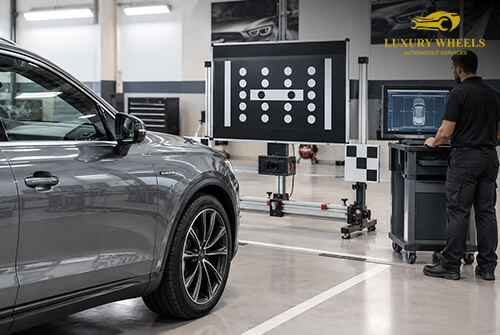
To ensure wheel alignment, the vehicle is set on a level platform that has sensors for alignment (camera-based as well as laser-based systems found in modern workshops) that are attached to every wheel. The system analyzes all alignment angles at once and then compares them to the specifications provided by the manufacturer for the specific vehicle. Techs tweak suspension elements until all readings are within the specifications.
Final Road Test: Ensuring Driving Performance and Straight Tracking
A professional service is concluded with a road test, not just an inspection of the visual. The technician is able to drive the vehicle to verify the straightness of the track, absence of vibration, and proper centering of the wheel. If there is a problem, it is taken back into the aligning bay to make a more adjustments. This is a non-negotiable step with a reliable service center.
Protecting Your Investment and Staying Safe on UAE Roads
Balance of tyres and wheel alignment aren't expensive extras; they're essential maintenance requirements for all vehicles that operate in the harsh conditions of Dubai. The heat, the speed bumps, the motorway speeds, the dust of the desert all of it is working against the geometry of your suspension and wheel balance constantly.
Regularly performing both of these services ensures the safety of your tyres, suspension mechanism, fuel efficiency, and, most importantly, your security. The cost of an expert alignment and balance check is not as expensive as a brand new set of tyres, an alignment repair, or the repercussions of a blowout on the E11 when you speed.
If your car is pulling, vibrating, or wearing tyres unevenly, don't wait. Contact the team at Luxury Wheels today to book a comprehensive wheel alignment and tyre balancing inspection. Our technicians work with all vehicle types-from daily sedans to high-performance luxury cars-using precision equipment calibrated to manufacturer specifications. Book your service at luxury-wheels.ae/services or call us now for immediate assistance.