Table of Contents
- The Paradigm Shift: From Mechanical Excellence to Digital Intelligence
- Seamless Connectivity: The Vehicle as a Mobile Ecosystem
- The Intelligent Concierge: AI and Machine Learning in the Cabin
- The Immersive Digital Cockpit: Redefining the User Interface
- Sensory Sophistication: Integrating Environment and Entertainment
- Advanced Driver Assistance Systems and the Path to Autonomy
- Lifecycle Management: Ensuring Longevity Through Software
- The Intelligence of Performance: Connectivity in Electric Vehicles
- The Digital Sanctuary: Prioritising Cybersecurity and Privacy
- Bespoke Digitalisation: Customisation and Personalisation
- Competitive Analysis: Different Philosophies of Integration
- Conclusion: The Future of the Connected Luxury Journey
- Frequently Asked Questions
Smart technology in luxury vehicles is transforming how premium automobiles operate, communicate, and respond to their owners. Modern luxury cars combine artificial intelligence (AI), advanced connectivity, intelligent software, digital cockpit technology, and sophisticated driver assistance systems to deliver experiences that extend far beyond traditional automotive engineering.
From AI-powered voice assistants and predictive maintenance to augmented reality displays and connected vehicle ecosystems, automotive innovation is redefining what luxury means.
For luxury car owners in Dubai and across the UAE, understanding these developments is particularly valuable when choosing, maintaining, or upgrading a premium vehicle. Technology should not simply look impressive; it should improve safety, reliability, comfort and everyday convenience.
The Paradigm Shift: From Mechanical Excellence to Digital Intelligence
Luxury automotive engineering traditionally focused on powerful engines, handcrafted interiors, premium materials and exceptional driving dynamics. Today, software and digital intelligence are equally important components of the ownership experience.
Modern connected luxury cars use integrated hardware, sensors, software and cloud-based networks to deliver intelligent functionality.
The Software-Defined Vehicle (SDV) as the New Status Symbol
A Software-Defined Vehicle (SDV) uses software to control, enhance and update important vehicle functions. Instead of relying exclusively on fixed hardware capabilities, an SDV can receive improvements through software updates.
These systems can support:
- Customisable driving modes and vehicle settings.
- Improved infotainment functionality.
- Advanced diagnostics and performance monitoring.
- Over-the-air (OTA) software updates.
- Personalised digital experiences.
Moving Beyond Loud Tech: The Concept of Invisible Luxury
The most sophisticated luxury technology often works quietly in the background. Intelligent climate control, adaptive suspension, predictive navigation and automatic cabin personalisation reduce the need for constant driver interaction.
True digital luxury is not about installing more screens. It is about making technology feel natural, effortless and reliable.
Seamless Connectivity: The Vehicle as a Mobile Ecosystem
Luxury vehicle connectivity allows vehicles to communicate with smartphones, cloud services, navigation platforms and compatible external infrastructure.
This connected ecosystem helps drivers access information, entertainment and vehicle functions while travelling.
Vehicle-to-Everything (V2X): Communicating with Infrastructure and Pedestrians
Vehicle-to-Everything (V2X) communication enables compatible vehicles to exchange information with other vehicles, infrastructure and road users.
Depending on infrastructure availability and vehicle compatibility, V2X can support:
- Traffic hazard notifications.
- Road condition information.
- Intersection awareness.
- Communication between connected vehicles.
Its effectiveness depends on network coverage, compatible equipment and supporting infrastructure.
Cloud-Based Navigation and Real-Time Traffic Prediction
Intelligent navigation systems combine GPS positioning, digital mapping and available traffic information to recommend efficient routes.
For Dubai motorists, connected navigation can help identify congestion, suggest alternative routes and provide more informed journey planning.
5G Connectivity and the Role of Mobile Data Networks
5G and other mobile networks can support faster communication between connected vehicles and cloud-based services.
Potential applications include connected entertainment, live navigation information, remote vehicle services and data-intensive digital functionality.
However, connectivity depends on network coverage, subscription availability and manufacturer-supported services.
The Intelligent Concierge: AI and Machine Learning in the Cabin
AI in luxury vehicles is helping transform conventional controls into intelligent systems that respond to driver behaviour and preferences.
Machine learning can identify patterns in vehicle usage, while artificial intelligence can help interpret commands and provide relevant assistance.
Natural Language Processing (NLP) and GenAI Voice Assistants
AI-powered voice assistants use natural language processing (NLP) to interpret spoken instructions.
Depending on the vehicle's capabilities, drivers may use voice commands to:
- Adjust cabin temperature.
- Control compatible entertainment functions.
- Search for destinations.
- Make calls.
- Access vehicle information.
Generative AI (GenAI) may further improve conversational interaction, although available functions vary by manufacturer and model.
Predictive Maintenance: Knowing Service Needs Before the Driver Does
Predictive vehicle maintenance uses diagnostic information, sensors and software analytics to identify potential maintenance requirements.
For example, monitoring battery performance, engine parameters and electronic system faults can help identify developing problems.
For premium vehicle owners, early diagnosis can support more efficient maintenance planning and reduce the likelihood of unexpected disruption.
Personalised Driving Experiences: Learning Driver Habits and Preferences
Personalisation allows compatible vehicles to remember selected preferences, including seating positions, climate settings, entertainment choices and driving modes.
Some systems associate these preferences with individual driver profiles through digital keys or biometric authentication.
The Immersive Digital Cockpit: Redefining the User Interface
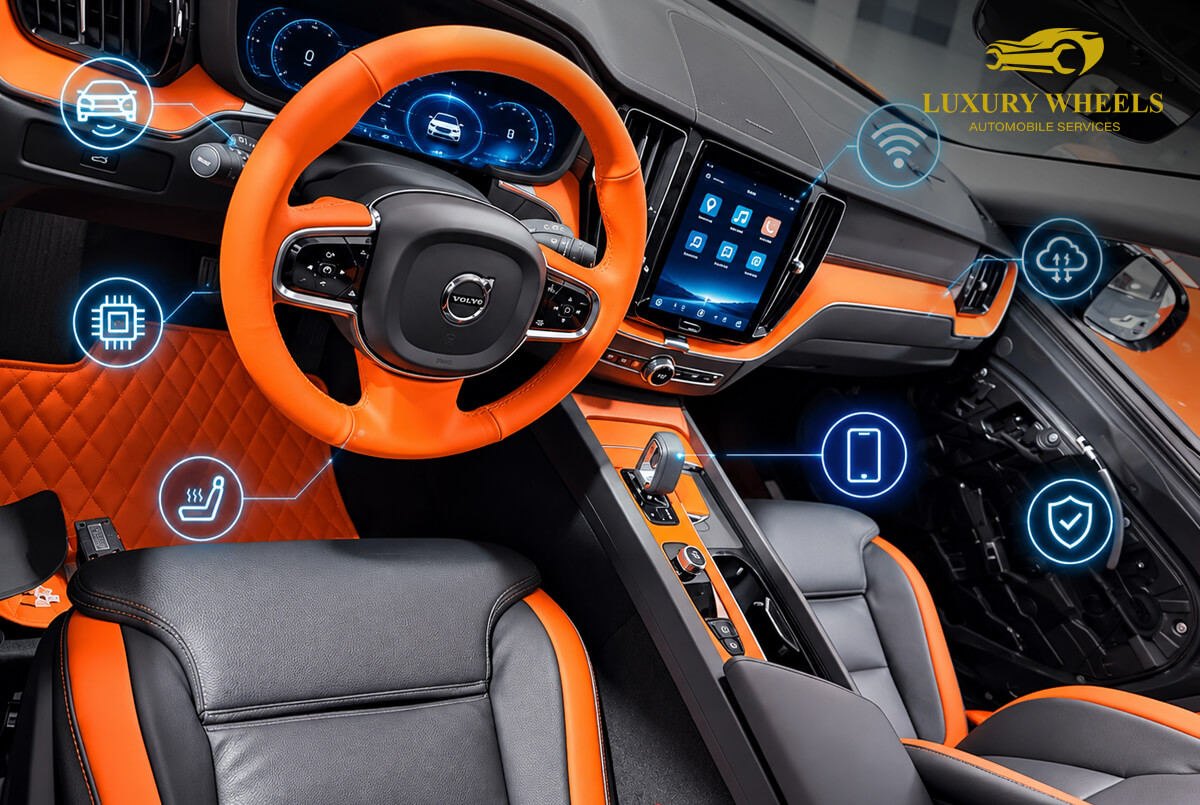
Digital cockpit technology combines displays, controls, infotainment and vehicle information into a coordinated human-machine interface (HMI).
The objective is to make essential information accessible without unnecessarily distracting the driver.
Augmented Reality (AR) Head-Up Displays and GPS Navigation
Augmented reality head-up displays can project selected information into the driver's forward field of vision.
Depending on the system, information may include navigation directions, speed, and relevant driving alerts.
Digital Dashboards and Human-Machine Interface (HMI) Innovation
Modern digital dashboards replace many conventional analogue instruments with configurable displays and touchscreen interfaces.
A well-designed HMI prioritises clarity, accessibility, and intuitive operation rather than simply maximising the number of available functions.
Biometric Integration: Personalised Settings via Facial and Fingerprint Recognition
Compatible biometric systems can use facial or fingerprint recognition to authenticate users or activate personalised settings.
These technologies can improve convenience, but their implementation should include appropriate data protection, authentication and privacy safeguards.
Sensory Sophistication: Integrating Environment and Entertainment
Luxury technology also enhances the atmosphere inside the cabin. Intelligent systems coordinate comfort, audio, lighting and environmental controls.
Adaptive Climate Control and Fragrance Systems
Advanced climate control systems can regulate temperature, airflow and individual cabin zones.
Selected premium vehicles also offer integrated fragrance systems, creating a more personalised interior environment.
In the UAE, effective cabin cooling and climate-system maintenance are especially important considerations.
High-Fidelity Soundscapes: The Role of Bang & Olufsen and Bespoke Audio
Premium audio systems from specialists such as Bang & Olufsen demonstrate how sound engineering contributes to automotive luxury.
Advanced speakers, digital signal processing, and acoustic optimisation create immersive entertainment experiences.
Custom Lighting Systems and Mood Enhancement
Ambient lighting systems allow occupants to customise cabin illumination through different colours and brightness settings.
Combined with seat comfort and climate controls, these features create a more individualised driving environment.
Advanced Driver Assistance Systems (ADAS) and the Path to Autonomy
Advanced Driver Assistance Systems (ADAS) use cameras, radar, sensors and software to support driver awareness and vehicle control.
AI-Powered Collision Avoidance and Intelligent Safety Shields
Depending on vehicle specifications, ADAS features may include:
- Automatic emergency braking.
- Forward collision warnings.
- Blind-spot monitoring.
- Lane departure warnings.
- Adaptive cruise control.
- Parking assistance.
These systems support the driver but do not eliminate the responsibility to drive attentively.
Level 3 Autonomous Features: Chauffeur-Driven Travel Without the Chauffeur
Level 3 conditional automation allows a system to perform defined driving tasks under specific conditions, while requiring the driver to remain available to take control when requested.
It is important not to confuse Level 2 driver assistance with autonomous driving. Availability, legal approval and operating conditions vary between manufacturers and markets.
Precision Parking Assistance and Remote Valet Features
Intelligent parking systems use cameras and sensors to assist with manoeuvring in restricted spaces.
Some compatible models also offer remote parking functions, allowing the driver to control selected parking movements through an approved interface.
Lifecycle Management: Ensuring Longevity Through Software
Luxury automotive technology requires ongoing maintenance, software support and electronic diagnostics.
Over-the-Air (OTA) Updates: Keeping the Luxury Experience Fresh
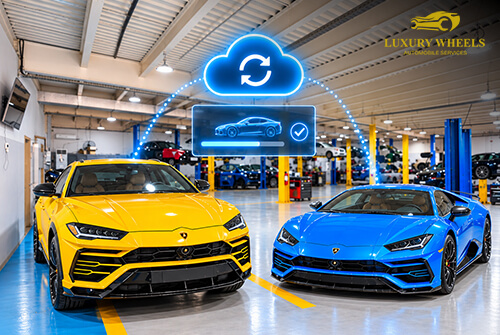
OTA updates allow manufacturers to deliver supported software improvements wirelessly.
Depending on the vehicle, these updates may improve infotainment, navigation, connectivity and selected electronic functions.
Scale at Speed: How Brands Deploy Global Software Enhancements
Manufacturers use scalable software architecture and controlled deployment processes to introduce improvements across compatible vehicle models.
Updates must still account for hardware differences, regional requirements and software compatibility.
After-Sales Technology Support and Remote Diagnostics
Professional diagnostics help identify faults in electronic control units, sensors, software and connected systems.
For luxury vehicle owners, choosing a service provider with suitable diagnostic equipment and technical knowledge is essential for maintaining reliability.
The Intelligence of Performance: Connectivity in Electric Vehicles
Electric luxury vehicles combine sophisticated software with electric powertrain technology.
Battery Intelligence Software: Optimising Range in the Porsche Taycan and Mercedes EQS
Electric vehicles such as the Porsche Taycan and Mercedes-Benz EQS use sophisticated battery management and thermal management systems.
These systems help monitor battery conditions, regulate operating temperatures and support efficient energy usage.
Intelligent Mobility: Integrating Charging Infrastructure into the Journey
Connected EV systems can help drivers locate compatible charging stations and plan journeys around charging requirements.
Charging availability, connector compatibility and charging speeds should always be considered before travelling.
Performance Data Analytics for the Driving Enthusiast
Vehicle analytics can provide information about energy consumption, driving behaviour, performance and system efficiency.
These insights help owners better understand how their vehicles operate.
The Digital Sanctuary: Prioritising Cybersecurity and Privacy
Connected vehicles generate and process information relating to location, vehicle operation, user preferences and digital services.
Protecting High-Net-Worth Data in a Connected World
Vehicle owners should understand what information their connected services collect and how it is used.
Strong account authentication, secure smartphone connections and careful management of digital keys can help protect personal information.
Cybersecurity Risks and the Premium on Digital Trust
Connected vehicle systems may face cybersecurity risks, including unauthorised access, insecure software, and compromised communication networks.
Manufacturers and service providers should follow secure software development, encryption, authentication, and vulnerability management practices.
Blockchain Technology for Secure Vehicle History and Documentation
Blockchain technology has potential applications in vehicle documentation and transaction records.
However, its practical use depends on implementation, verification processes and industry adoption. It should not be considered an automatic guarantee of vehicle authenticity or security.
Bespoke Digitalisation: Customisation and Personalisation Programs
Luxury is increasingly defined by the ability to tailor both physical and digital experiences.
The Atelier of the Fuoriserie Personalisation Program
Bespoke personalisation programmes, including Ferrari's Fuoriserie concept, demonstrate how premium manufacturers combine individual design preferences with specialist craftsmanship.
The same philosophy can extend to selected digital interfaces and vehicle configurations.
Microservice-Based Features: Tailoring the Car's Functionality to the Owner
Modern software architecture can separate different vehicle functions into manageable services.
This approach may support modular updates and more flexible digital functionality, subject to manufacturer architecture and compatibility.
Matching Heritage Craftsmanship with Modern Infotainment Services
Traditional luxury craftsmanship remains important even as vehicles become increasingly digital.
The strongest automotive experiences balance premium materials, thoughtful design, intuitive technology, and dependable functionality.
Competitive Analysis: Differing Philosophies of Integration
Luxury manufacturers approach digital innovation differently.
The Minimalist Tech Approach: Tesla and Software-First Disruptors
Tesla demonstrates a software-focused automotive approach, with integrated digital interfaces, connected services, and frequent software development.
The Heritage-Tech Hybrid: Bentley and Rolls-Royce
Bentley and Rolls-Royce combine traditional craftsmanship with modern infotainment, advanced comfort features, and evolving electric vehicle technology.
The Digital Intelligence Quotient: Comparing Modern Luxury Leaders
There is no universally accepted ranking of luxury brands based on digital intelligence.
Buyers should compare vehicles according to practical criteria:
- Software functionality and update support.
- Infotainment usability.
- Connectivity and smartphone integration.
- Driver assistance capabilities.
- Cybersecurity and privacy provisions.
- Diagnostic and after-sales support.
The best vehicle is the one whose technology suits the owner's requirements, rather than the one with the longest feature list.
Conclusion: The Future of the Connected Luxury Journey
Smart technology in luxury vehicles is changing the relationship between people, automobiles and digital services.
AI, connected vehicle systems, predictive maintenance, intelligent safety features and software-defined architecture are creating more personalised and sophisticated ownership experiences.
Emerging Technologies: The Horizon of Smart Vehicle Systems
Future developments may include more capable AI assistants, improved V2X communication, advanced battery analytics, generative AI interfaces and increasingly sophisticated driver assistance systems.
Their adoption will depend on safety validation, regulatory approval, infrastructure and manufacturer investment.
The Lasting Value of a Digitally Integrated Masterpiece
Technology creates lasting value when it works reliably and complements the vehicle's engineering.
For luxury vehicle owners in Dubai, professional maintenance, accurate diagnostics, and appropriate software support are important to protecting that investment.
Looking after a luxury vehicle requires more than maintaining its appearance. Its mechanical, electrical and digital systems deserve equal attention.
At Luxury Wheels, owners can explore automotive care solutions, including mechanical and electrical services, software programming, vehicle servicing and interior enhancement.
Whether you are maintaining a premium automobile or addressing an electronic or software-related concern, choosing an experienced automotive service provider is an important step towards preserving its performance and ownership experience.
Contact Luxury Wheels today to discuss your vehicle's service requirements and discover professional automotive care in Dubai.